Introduction
A high converting website is no longer just a nice-to-have — it’s essential for business growth in 2026. Many businesses invest heavily in building a website, but very few focus on what truly matters: converting visitors into leads, customers, and revenue.
You might already be getting traffic, but if your website isn’t converting, you’re leaving money on the table.
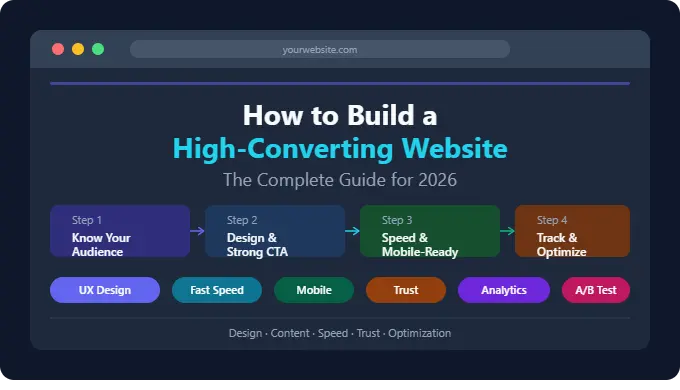
In this complete guide, you’ll learn how to build a high converting website step by step, focusing on design, user experience, content, and performance.
What is a High Converting Website?
A high converting website is designed with one clear goal: to turn visitors into customers.
This could mean:
- Generating leads
- Selling products
- Getting bookings or inquiries
Instead of just looking good, a high converting website focuses on user behavior and guides visitors toward taking action.
1. Understand Your Target Audience
Before designing anything, you need to understand who your users are.
Key Questions to Ask:
- Who is your ideal customer?
- What problems are they trying to solve?
- What motivates them to take action?
Why This Matters
When you understand your audience, you can create a website that speaks directly to their needs and increases conversion rates.
2. Create a Clear and Simple Layout
A cluttered website confuses users and reduces conversions.
Best Practices:
- Use a clean design
- Keep navigation simple
- Highlight important sections
- Avoid too many distractions
Tip :
Visitors should understand what your business offers within 5 seconds of landing on your site.
3. Craft a Strong Hero Section
The hero section is the first thing users see — and it determines whether they stay or leave.
What to Include:
- Clear headline
- Subheading explaining value
- Call-to-action (CTA) button
- Relevant image or visual
Example
Instead of:
“Welcome to Our Website”
Use:
“Build a Website That Converts Visitors into Customers”
4. Use Powerful Call-to-Actions (CTA)
CTAs guide users toward taking action
Examples:
- Get Started
- Book a Call
- Request a Quote
CTA Best Practices:
- Use action-oriented language
- Place CTAs above the fold
- Repeat CTAs throughout the page
A strong CTA can significantly improve your conversion rate.
5. Write Conversion-Focused Content
Your website content should not just inform — it should persuade.
Key Elements:
- Clear messaging
- Benefit-focused copy
- Short paragraphs
- Bullet points
Focus on Benefits :
Instead of listing features, explain how your product or service helps the user.

6. Optimize Website Speed
Speed directly impacts conversions.
Why Speed Matters:
- Slow sites increase bounce rates
- Faster sites improve user experience
- Google ranks faster websites higher
How to Improve Speed:
- Optimize images
- Use caching
- Choose fast hosting
Even a 1-second delay can reduce conversions significantly.
7. Make Your Website Mobile-Friendly
Most users browse on mobile devices.
Mobile Optimization Tips:
- Responsive design
- Large clickable buttons
- Fast loading
A mobile-friendly site ensures a smooth experience for all users.
8. Build Trust with Users
Trust is a major factor in conversions.
Ways to Build Trust:
- Testimonials
- Reviews
- Case studies
- Secure payment icons
Pro Tip
Add real client feedback to increase credibility.
9. Use Analytics and Track Performance
You can’t improve what you don’t measure.
Track:
- Conversion rates
- Bounce rates
- User behavior
Tools:
- Google Analytics
- Heatmaps
Use data to continuously improve your website.
10. Test and Improve (Continuous Optimization)
A high converting website is never “finished.”
What to Test:
- Headlines
- CTA buttons
- Layout
A/B Testing
Test different versions to see what performs better.
Common Mistakes to Avoid
- Too much clutter
- Weak CTAs
- Slow loading speed
- Poor mobile experience
- Lack of clear messaging
Avoiding these mistakes can instantly improve your conversions.
Final Thoughts
Building a high converting website in 2026 requires more than just good design. It’s about understanding your audience, delivering value, and guiding users toward action.
By focusing on:
- Clear design
- Strong CTAs
- Fast performance
- User experience
You can create a website that not only attracts visitors but turns them into customers.