1. Introduction
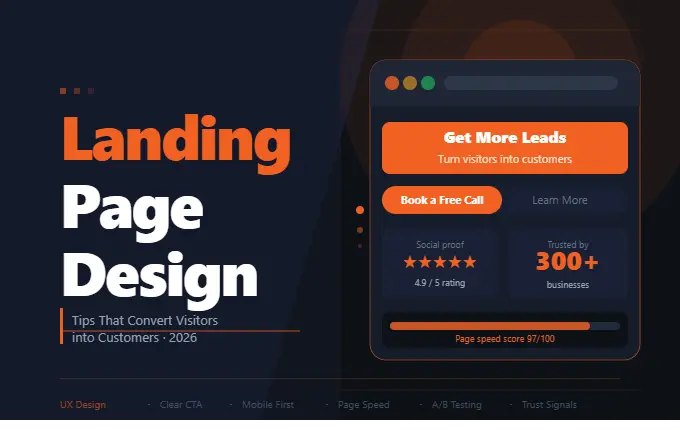
Landing page design plays a critical role in turning website visitors into customers. Unlike regular web pages, a landing page is built with a single goal in mind — conversion.
Whether you want users to sign up, book a call, or make a purchase, your landing page design directly affects your results. A poorly designed page can drive visitors away, while a well-structured page can significantly improve your conversion rate.
In this guide, you will learn practical landing page design strategies that work in 2026.
2. Focus on One Clear Goal
One of the most common mistakes in landing page design is trying to achieve multiple goals at once. A high-performing landing page focuses on a single objective.
Each page should have one primary action you want users to take. This could be booking a call, filling out a form, or making a purchase.
Best practices:
- Define one clear goal
- Use one main CTA
- Keep messaging focused
Keeping the focus clear reduces confusion and increases conversions.
3. Create a Strong Hero Section
The hero section is the first thing users see when they land on your page. It needs to communicate your value immediately.
A strong hero section includes:
- Clear headline
- Supporting subheadline
- Visible call-to-action button
- Relevant visual
Visitors should understand what you offer within a few seconds.
4. Write Clear and Persuasive Content
Content plays a major role in guiding users toward action. Your copy should be simple, clear, and focused on benefits rather than features.
Focus on:
- Benefit-driven messaging
- Short paragraphs
- Easy readability
Well-written content builds trust and increases the likelihood of conversion.
5. Use Effective Call-to-Actions
Call-to-action buttons guide users toward the desired action.
Best practices:
- Use action-oriented text (Get Started, Book a Call)
- Make buttons visually distinct
- Place CTAs above the fold
- Repeat CTAs throughout the page
Strong CTAs significantly improve conversion rates.

6. Add Social Proof and Trust Elements
Users are more likely to take action when they trust your business.
Include:
- Testimonials
- Client reviews
- Case studies
- Client logos
These elements help reduce hesitation and build credibility.
7. Optimize Page Speed
Page speed has a direct impact on user experience and conversion rates.
Improve speed by:
- Optimizing images
- Reducing unnecessary scripts
- Using reliable hosting
A fast-loading page keeps users engaged.
8. Ensure Mobile Optimization
A large portion of users access websites on mobile devices. Your landing page must work seamlessly across all screen sizes.
Ensure:
- Responsive design
- Easy navigation
- Fast loading on mobile
A smooth mobile experience improves engagement and conversions.
9. Keep the Design Clean and Simple
A clean design helps users focus on the main message and action.
Design tips:
- Use whitespace effectively
- Keep layout simple
- Maintain consistent colors
- Highlight important sections
Simple design improves readability and user experience.
10. Reduce Distractions
Landing pages should eliminate anything that takes attention away from the main goal.
Avoid:
- Too many links
- Complex navigation
- Unnecessary elements
The simpler the page, the better it performs.
11. Test and Improve Performance
A high-performing landing page is always evolving.
Test elements such as:
- Headlines
- CTA buttons
- Layout
Small improvements can lead to better conversion rates.
12. Common Mistakes to Avoid
- Multiple goals on one page
- Weak or unclear headlines
- Slow loading speed
- Poor mobile experience
- Lack of trust elements
Avoiding these mistakes can quickly improve results.
Final Thoughts
Landing page design is one of the most effective ways to increase conversions. By focusing on clarity, user experience, and strong calls to action, you can create pages that drive real results.
Businesses that invest in optimized landing pages will have a clear advantage in converting visitors into customers.