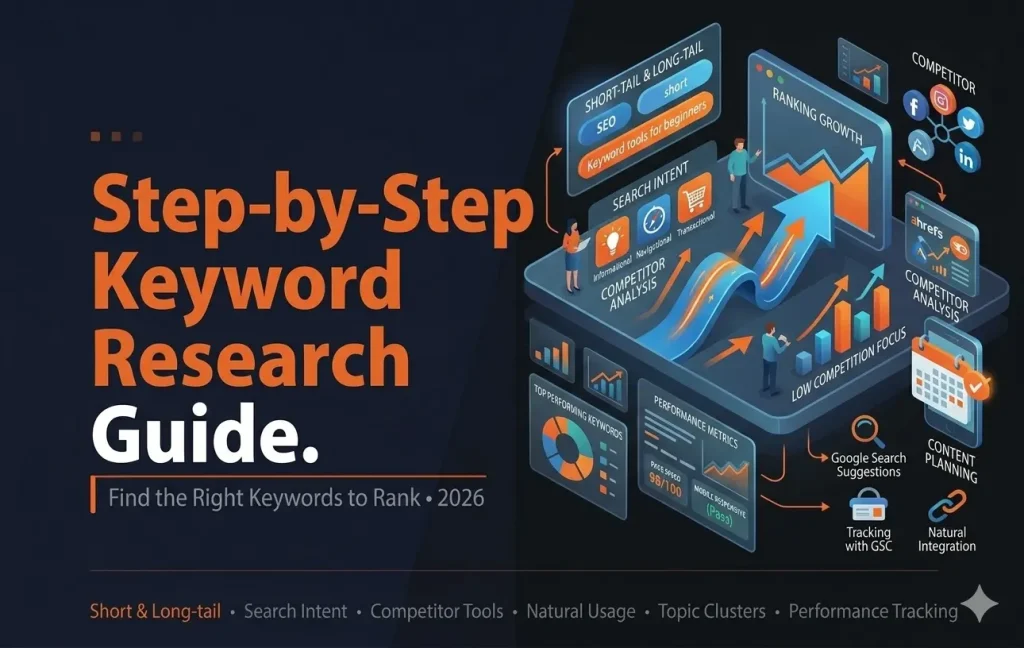
1. Introduction
Keyword research is the foundation of SEO. If you want to rank your website on Google and attract the right audience, you need to understand how keyword research works.
Without proper keyword research, your content may never reach the right people. In 2026, competition is increasing, and targeting the right keywords is more important than ever.
In this guide, you will learn how to do keyword research step by step and find keywords that can drive real traffic to your website.
2. What is Keyword Research
Keyword research is the process of finding the words and phrases that people search for on search engines.
These keywords help you understand:
- What your audience is searching for
- How competitive a topic is
- What content you should create
Using the right keywords increases your chances of ranking higher.
3. Types of Keywords
Understanding different types of keywords is important for effective keyword research.
Main types include:
- Short-tail keywords (e.g., SEO)
- Long-tail keywords (e.g., keyword research for beginners)
- Informational keywords
- Transactional keywords
Long-tail keywords are easier to rank and bring targeted traffic.
4. Understand Search Intent
Search intent means the reason behind a user’s search.
Types of intent:
- Informational (looking for information)
- Navigational (looking for a specific site)
- Transactional (ready to take action)
Matching your content with search intent improves rankings and conversions.
5. Find Keyword Ideas
There are many ways to find keyword ideas.
You can:
- Use Google search suggestions
- Check “People also ask” section
- Analyze competitor websites
- Use keyword tools
These methods help you discover valuable keywords.

6. Use Keyword Research Tools
Keyword tools make the process easier and more accurate.
Popular tools:
- Google Keyword Planner
- Ubersuggest
- Ahrefs
- SEMrush
These tools show search volume, competition, and keyword difficulty.
7. Choose Low Competition Keywords
To rank faster, focus on low competition keywords.
Look for keywords that:
- Have decent search volume
- Have low difficulty
- Match your content
This strategy helps new websites grow quickly.
8. Analyze Competitors
Competitor analysis is a powerful part of keyword research.
Check:
- What keywords they rank for
- Their top-performing pages
- Content structure
This helps you identify opportunities and improve your strategy.
9. Use Keywords Naturally in Content
After finding keywords, use them properly in your content.
Best practices:
- Include keywords in titles
- Use them in headings
- Add them naturally in paragraphs
Avoid keyword stuffing and keep content readable.
10. Organize Keywords for Content Strategy
Grouping keywords helps you plan your content.
You can:
- Create topic clusters
- Plan blog series
- Target related keywords
This improves SEO and content structure.
11. Track Keyword Performance
Tracking helps you understand which keywords are working.
Monitor:
- Rankings
- Traffic
- Click-through rates
Use tools like Google Search Console to track performance.
12. Common Keyword Research Mistakes
- Targeting high competition keywords
- Ignoring search intent
- Not analyzing competitors
- Overusing keywords
Avoiding these mistakes improves your results.
Final Thoughts
Keyword research is one of the most important parts of SEO. By choosing the right keywords, you can attract the right audience and increase your website traffic.
With consistent practice, keyword research becomes easier and more effective.