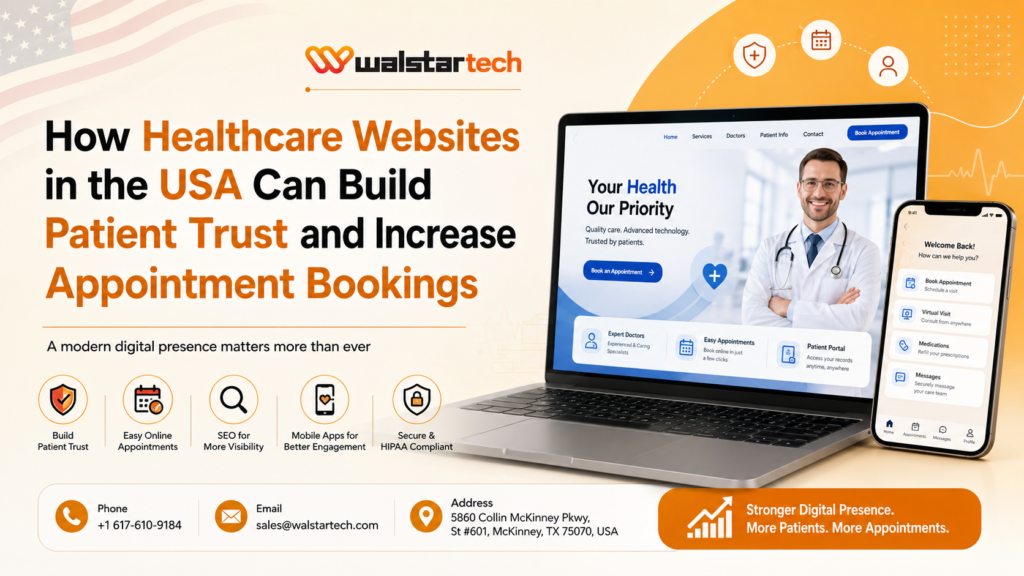
A healthcare website is often the first place patients evaluate trust, professionalism, and convenience, so it must meet high standards for usability, accessibility, and privacy. The U.S. Department of Health and Human Services states that all HHS websites must follow federal requirements for accessibility, content, and compliance, and it provides detailed guidance on building and managing trustworthy government sites. Web Policies and Guidance – HHS.gov HHS also recommends clear About Us pages, visible contact information, privacy policies, and meaningful links such as “book an appointment” to help users feel confident and more willing to schedule care. Website Requirements Checklist – HHS.gov By following these federal best practices—fast loading, mobile-friendly design, plain-language content, and secure forms—healthcare websites in the USA can build patient trust, reduce anxiety about online information, and increase appointment bookings in line with official standards.
Why trust begins with the website
In healthcare, trust is everything. Patients are not just choosing a service; they are choosing a provider for their health and well-being. That decision often starts online. A clean design, professional layout, and easy navigation can immediately create a sense of comfort and reliability.
If a website looks outdated, is difficult to use, or fails to provide important details, patients may leave before taking action. On the other hand, a strong website can reassure them that your practice is modern, patient-focused, and responsive. This is especially important in the U.S. market, where patients often compare multiple providers before making a choice.
What patients expect from a healthcare website
A successful healthcare website should make the patient journey simple and stress-free. Visitors should be able to find what they need without confusion. At a minimum, your website should include:
- Clear service pages.
- Doctor and staff profiles.
- Appointment booking options.
- Insurance and billing information.
- Mobile-friendly design.
- Patient testimonials.
- Contact forms and call buttons.
- Telemedicine or virtual visit options.
- Patient portal access.
- Location and office hours.
These features help build confidence and make it easier for patients to take the next step. The easier it is for people to understand your practice, the more likely they are to book an appointment.
SEO helps your healthcare website get found
Even the best website will not perform well if people cannot find it. That is why SEO is essential. Search engine optimization helps your website appear in Google results when patients search for medical services, clinics, or healthcare providers in the USA.
For healthcare businesses, SEO should focus on keywords that match patient intent, such as healthcare website design, medical practice website, patient portal, telemedicine website, online appointment booking, and HIPAA-compliant website. Blog content also plays a major role. When you publish helpful articles that answer common patient questions, your website has more opportunities to rank and attract organic traffic.
SEO is not just about keywords. It also includes page speed, mobile responsiveness, site structure, metadata, internal linking, and content quality. A well-optimized website tells search engines that your site is relevant and useful, which can improve visibility over time.
Website development creates the user experience
While SEO helps people find your site, website development determines how they experience it. A healthcare website must be fast, secure, responsive, and easy to navigate. This means clean code, reliable hosting, strong technical performance, and thoughtful page structure.
Good website development also ensures that key features work properly. Appointment forms should be smooth and functional. Service pages should load quickly. Contact buttons should be easy to tap on mobile devices. The overall experience should feel seamless and professional.
For healthcare providers, development is not just a technical task. It is part of patient care. A well-developed website saves time for staff, reduces friction for patients, and supports better communication between the practice and its audience.
Mobile app development adds convenience and engagement
In today’s digital world, many healthcare providers are also exploring mobile app development. A mobile app can give patients a more convenient way to connect with your practice, schedule appointments, receive reminders, access resources, or communicate securely.
For clinics and healthcare brands looking to improve engagement, mobile app development can be a valuable extension of the website. It supports repeat visits, improves accessibility, and makes the patient experience more personal. Features like appointment reminders, telehealth access, medication alerts, and secure messaging can add real value.
When combined with a strong website and SEO strategy, mobile app development helps create a complete digital ecosystem. This is especially useful for healthcare providers who want to improve patient retention and stand out in a competitive U.S. market.
This workflow works best when handled in stages rather than all at once. Content-heavy sites may need extra review because formatting, embedded media, and internal links often behave differently in WordPress. If the Joomla site has special modules or custom functionality, make sure those features are tested individually. The more customized the old site is, the more important manual QA becomes.
How Walstar Tech supports healthcare growth
Walstar Tech helps healthcare providers build a strong digital foundation with SEO, website development, and mobile app development all working together. Instead of offering isolated services, Walstar Tech focuses on creating a complete online ecosystem that supports visibility, usability, and patient engagement.
Whether you need a professional healthcare website, improved search rankings, or a mobile app that enhances patient communication, Walstar Tech can help design and develop a solution tailored to your goals. The focus is always on building secure, modern, and performance-driven digital experiences that help healthcare businesses grow.
For healthcare practices in the USA, this kind of support can make a major difference. A well-planned digital strategy helps attract more patients, improve brand trust, and create smoother operational workflows. Walstar Tech brings these elements together in one place so your business can move forward with confidence.
Why content and design should work together
A beautiful website alone is not enough. Likewise, strong SEO without a good user experience will not deliver the best results. The most effective healthcare websites combine both. Content should answer real patient questions, while design should guide visitors toward action.
This balance is what creates long-term success. Patients feel informed, search engines recognize valuable content, and your practice benefits from more traffic and more conversions. When your website, SEO, and mobile app development strategy work together, your digital presence becomes much stronger.
A smarter way to grow online
Healthcare providers in the USA need more than a basic online presence. They need a complete digital strategy that attracts visitors, builds trust, and makes patient interaction simple. That is why SEO, website development, and mobile app development should be part of the same growth plan.
Walstar Tech helps make that possible by delivering healthcare-focused digital solutions that are built for performance and scalability. From your website to your app to your search visibility, every part of your online presence should support one goal: helping more patients connect with your practice.
Final Thoughts
A modern healthcare website can do much more than display information. It can build trust, increase visibility, support patient engagement, and drive appointment bookings. When paired with strong SEO, professional website development, and useful mobile app development, it becomes a complete growth engine for your healthcare business.
If you want to strengthen your digital presence in the USA, Walstar Tech can help you create a solution that feels professional, natural, and built for results.
Frequently Asked Questions (FAQs)
1. What makes a healthcare website effective for patients in the USA?
A healthcare website is effective when it is easy to navigate, mobile-friendly, secure, and designed to help patients quickly find services, book appointments, and contact the practice.
2. How can SEO help a healthcare website get more traffic?
SEO helps a healthcare website appear in search engine results for relevant keywords like healthcare website design, patient portal, and online appointment booking, which brings in more qualified visitors.
3. Why is website development important for healthcare businesses?
Website development ensures the site is fast, secure, responsive, and user-friendly, which improves patient experience and supports better engagement with the practice.
4. How does mobile app development support healthcare providers?
Mobile app development gives patients more convenient ways to book appointments, receive reminders, access services, and communicate with healthcare providers.
5. How can Walstar Tech help healthcare brands grow online?
Walstar Tech provides SEO, website development, and mobile app development services to help healthcare businesses improve visibility, patient engagement, and overall digital growth.
Ready to transform your customer relationships with AI-powered business solutions?
📞 Phone: +1 617-610-9184
📧 Email: sales@walstartech.com
📍 Address: 5860 Collin McKinney Pkwy, St #601, McKinney, TX 75070, USA